
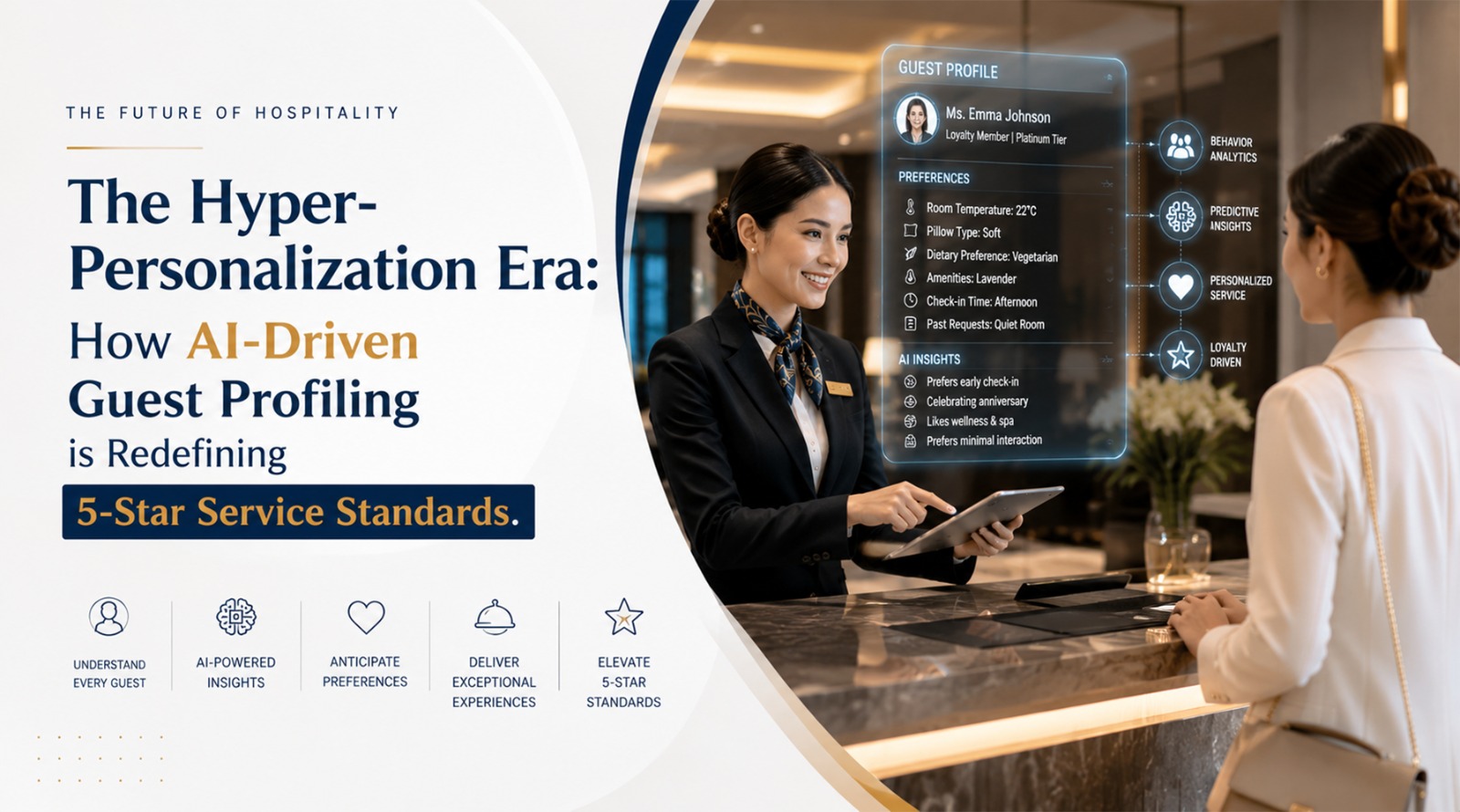
Luxury hospitality has always been built on one fundamental principle, making guests feel valued. However, in 2026, personalization has evolved far beyond remembering a guest's preferred room type or favorite breakfast order. Artificial Intelligence (AI) is now helping hotels create highly customized experiences that anticipate guest needs before they even express them.
This shift toward hyper-personalization is transforming the hospitality industry, especially among premium and luxury properties. From AI-powered guest profiling to predictive service recommendations, hotels are setting new benchmarks for customer satisfaction and loyalty. As technology reshapes the industry, hospitality professionals must develop new skills that blend traditional service excellence with digital innovation, making hotel management courses more relevant than ever.
Understanding Hyper-Personalization in Hospitality
Hyper-personalization refers to the use of real-time guest data, behavioral insights, and AI technologies to create highly tailored experiences. Unlike traditional personalization, which relies on basic customer preferences, hyper-personalization analyzes multiple data points to predict guest expectations and deliver customized services instantly.
Modern hotels can now track guest preferences across various touchpoints, including booking patterns, dining habits, wellness choices, room preferences, and communication styles. This information allows hotels to create seamless and memorable experiences throughout the guest journey.
For example, a returning guest may automatically receive their preferred room temperature, customized dining recommendations, and personalized activity suggestions upon arrival. These seemingly small details significantly enhance guest satisfaction and encourage repeat visits.
The Role of AI-Driven Guest Profiling
AI-driven guest profiling is becoming a core strategy for luxury hospitality brands. Advanced systems analyze customer interactions, previous stays, online reviews, social media engagement, and spending behavior to create comprehensive guest profiles.
These insights help hotels:
- Personalize room amenities
- Recommend relevant dining options
- Offer tailored wellness experiences
- Customize loyalty program rewards
- Predict future travel preferences
As hotels increasingly adopt AI technologies, professionals trained through bachelor's degree hotel management programs and specialized hospitality courses gain a competitive advantage in managing these advanced systems effectively.
Enhancing Guest Satisfaction Through Predictive Service
One of the most exciting applications of AI in hospitality is predictive service. Rather than waiting for guests to make requests, hotels can proactively address their needs.
For instance, if a business traveler frequently orders early-morning coffee and uses meeting facilities, the hotel can automatically schedule these services before arrival. Similarly, families traveling with children can receive personalized entertainment recommendations and child-friendly dining options.
This proactive approach creates a sense of exclusivity that defines modern luxury hospitality.
Students pursuing a BSc in hotel management or a bachelor's in a hotel management program are increasingly learning how data analytics and customer experience management contribute to service excellence in today's hospitality environment.
Technology and Human Touch: Creating Better Guest Experiences Together
As AI becomes more integrated into hospitality operations, the importance of human connection remains unchanged. Rather than replacing hotel staff, technology provides valuable insights that help employees deliver more personalized, efficient, and memorable guest experiences.
Guests still value genuine warmth, empathy, and personalized attention from hotel staff. AI simply equips employees with better information, allowing them to deliver more meaningful and efficient service.
For example, front office teams trained in a front office management course can use guest insights to provide personalized check-in experiences while maintaining authentic human connections.
How Hospitality Education is Evolving
The rise of AI-driven hospitality is influencing educational programs across India and globally. Institutions are updating their curricula to include emerging topics such as digital hospitality management, customer analytics, revenue optimization, and AI applications.
Students exploring the best hotel management courses in India are increasingly seeking programs that combine operational expertise with technological skills. Modern hospitality education now extends beyond traditional hotel operations to include innovation, sustainability, and digital transformation.
Many aspiring professionals are also considering specialized pathways such as the following:
- Diploma in hotel management
- Hospitality and tourism management
- Hospitality and tourism management courses
- Hotel management degree course
- Bachelor of science in hotel management
- Bachelor of science in hospitality management
These programs prepare graduates for leadership roles in an industry that is rapidly embracing technology.
Opportunities Beyond Traditional Hotel Operations
Hyper-personalization is creating new career opportunities across the hospitality sector. Hotels now require professionals with expertise in customer experience design, hospitality analytics, digital marketing, and guest relationship management.
In addition, sectors such as luxury resorts, cruise lines, event management companies, and tourism organizations are actively seeking candidates with a strong understanding of both hospitality operations and technology.
This trend has increased interest in programs such as travel and tourism courses, tourism management courses, and travel and tourism degrees, which provide broader exposure to the evolving travel ecosystem.
Students researching the best colleges for hotel management in India often prioritize institutions that offer industry exposure, technology-driven learning, and strong placement support.
Why Future Hospitality Leaders Must Embrace AI
The hospitality industry is entering a new era where guest expectations continue to rise. Travelers increasingly expect personalized recommendations, frictionless experiences, and services tailored to their individual preferences.
Hotels that successfully leverage AI-driven guest profiling will be better positioned to improve customer satisfaction, increase revenue, and strengthen brand loyalty. However, achieving these outcomes requires skilled professionals who understand both hospitality fundamentals and emerging technologies.
This is why enrollment in hospitality management colleges, top hotel management colleges in India, and institutions recognized as the best hotel management institutes in India continues to grow. Employers are looking for graduates who can navigate the intersection of technology, service excellence, and business strategy.