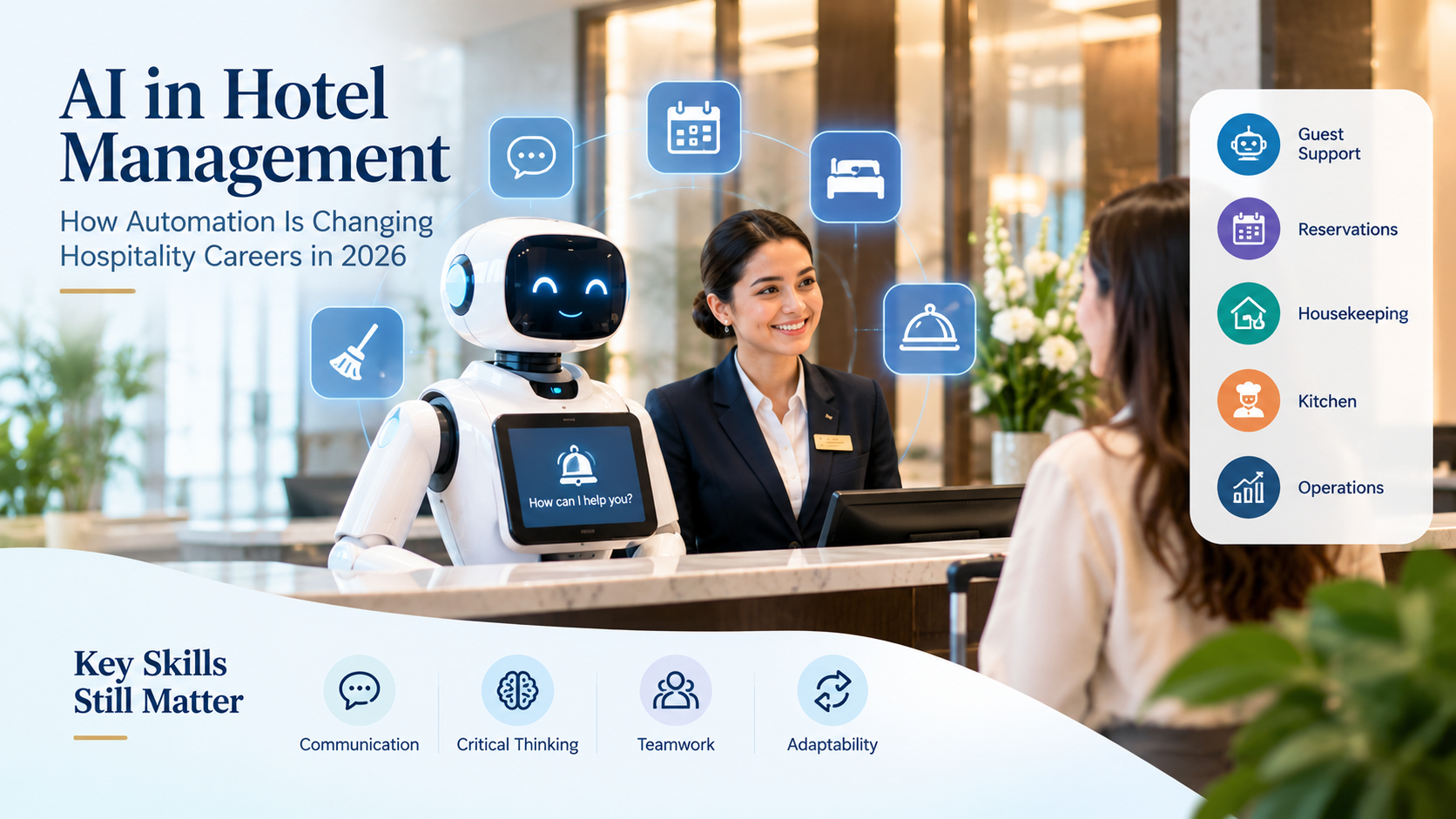
A hotel employee may need to answer a guest's question, update a reservation, coordinate with housekeeping, and communicate a special request to the kitchen within a short period. Digital technology is changing how these responsibilities are handled. Artificial intelligence can assist with certain tasks, giving hospitality professionals another set of tools to manage information and organise their work.
For students planning a future in hospitality, the important question is not whether machines will take over every responsibility. It is how technology may change everyday duties and what skills employers will continue to need from people.
AI Is Changing the Way Hotel Teams Handle Information
Hotel operations generate information throughout the day, including booking details, room availability, guest enquiries, and service requests. AI-supported software can help organise some of this information and identify patterns that employees might otherwise have to examine manually.
For instance, a digital assistant could respond to a routine enquiry about check-in timings. A hotel team member could then concentrate on a guest whose request requires personal attention. These applications depend on the systems available at a property, and important details still require verification.
Students exploring international hospitality management should understand that technology supports operational decisions rather than removing the need for sound judgement.
Guest Communication Still Needs Human Judgement
Not every hotel interaction follows a predictable pattern. A delayed arrival, a complaint about room conditions, or a request involving several departments may require an employee to assess the circumstances before responding.
Automated replies can provide useful information, but an unsuitable answer may create confusion or leave a guest feeling unheard. Hospitality professionals need to interpret requests, explain available solutions, and communicate with courtesy.
This makes interpersonal abilities particularly relevant for students considering an international hotel management course. Clear speaking, active listening, patience, and decision-making remain useful even when a workplace relies heavily on digital systems.
Understanding Technology Across Hotel Departments
AI has potential applications beyond reception. Depending on the software and systems a property uses, technology may assist with forecasting demand, organising maintenance requests, reviewing customer feedback, or monitoring inventory.
Consider a simple example: information about frequently requested menu items could help a food service team plan stock more carefully. However, staff still need to check product quality, account for changing demand, and follow food safety procedures.
Similarly, housekeeping teams may use digital systems to track room status, while supervisors coordinate priorities with front-office employees.
A well-rounded international hospitality management course should be evaluated for its coverage of operational knowledge, computer-based learning, and practical experience.
How Students Can Prepare for Technology-Driven Workplaces
Students do not need advanced programming knowledge to begin developing useful digital skills. They can start by learning to work accurately with computer systems, interpret information, protect confidential guest details, and follow established procedures.
IAM's stated educational aims include preparing learners to work in computerised environments and understand changes in information technology. Its course information also describes practical training resources, including training kitchens, restaurants, front-office areas, and guest rooms. These facilities relate to the operational knowledge students need alongside digital awareness.
Hospitality Skills Will Matter Alongside AI?
Technology works best when employees understand the task it is intended to support. Future professionals can prepare by developing four core abilities: accurate communication, critical thinking, teamwork, and adaptability.
They should also learn to verify information before acting on it. AI-generated responses can contain errors, and guest information must be handled responsibly. In a hotel environment, an unchecked mistake can affect reservations, service delivery, or customer confidence.
Students interested in international hospitality management courses can use these considerations when comparing programmes and identifying areas for further learning.