
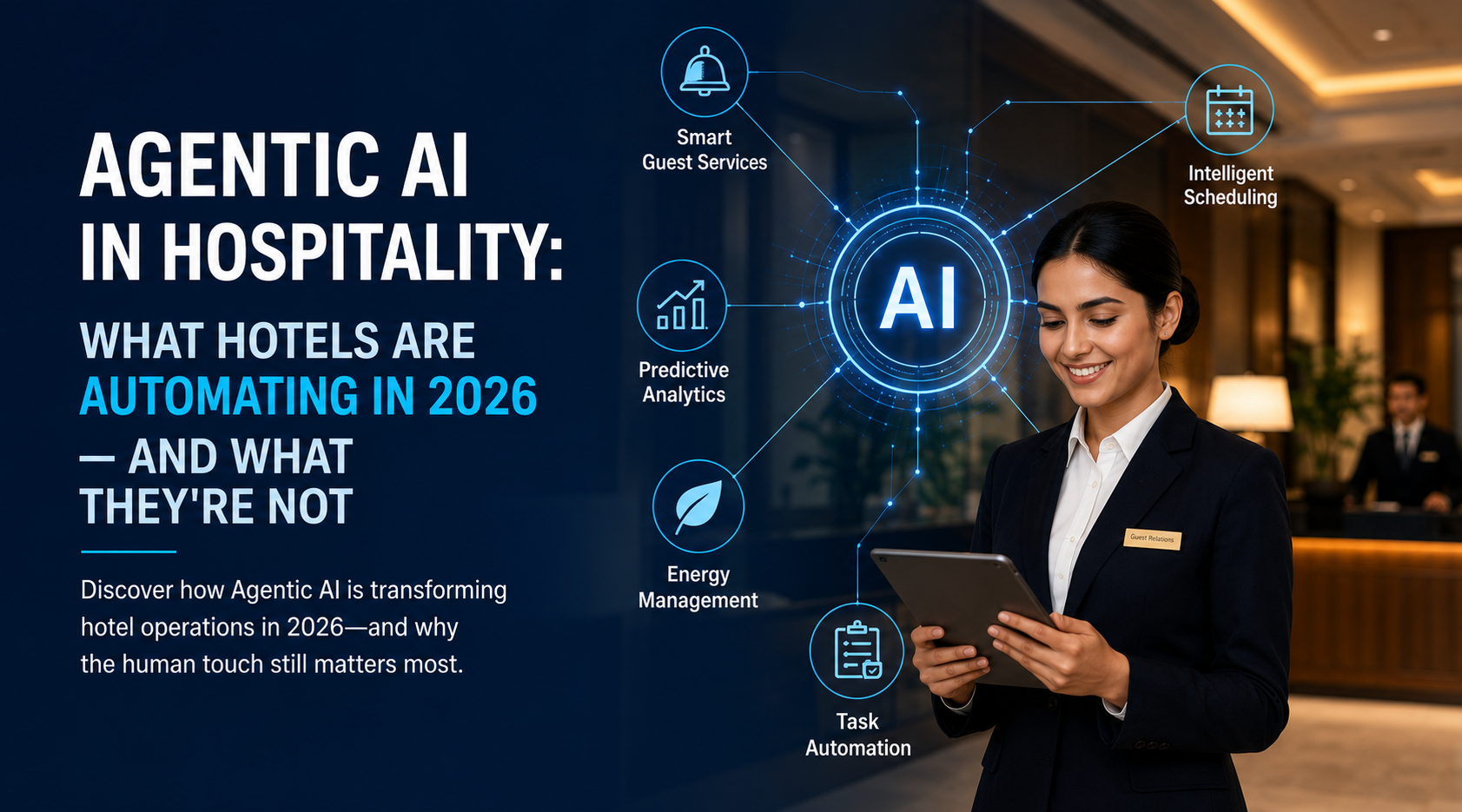
A guest checks into a hotel after a delayed flight. The room is ready, the preferred floor has already been assigned, dinner reservations have been suggested based on dietary preferences, and housekeeping has adjusted the room temperature before arrival. It feels effortless, yet dozens of decisions have been made in the background without constant human intervention.
This is the direction the hospitality industry is moving in with Agentic AI.
Unlike traditional automation, which follows predefined instructions, Agentic AI can make decisions, prioritize tasks, and coordinate multiple systems to achieve a specific goal. In hotels, this means technology can independently manage routine operations while hotel teams focus on creating meaningful guest experiences.
For students exploring hotel management courses, understanding how technology is reshaping hotels is becoming just as important as learning front office operations, food production, or guest relations.
Understanding Agentic AI in Hospitality
Most people are already familiar with artificial intelligence through chatbots or recommendation systems. Agentic AI goes a step further.
Rather than responding to a single request, it can complete a sequence of connected tasks with minimal supervision. For example, if a guest's flight is delayed, an intelligent system can update the arrival time, inform housekeeping, adjust restaurant reservations, notify the front office, and prepare a personalized welcome, all without requiring separate instructions for every action.
Hotels are beginning to adopt these intelligent systems because they improve operational efficiency while allowing employees to spend more time engaging directly with guests.
Students pursuing a bachelor's degree in hotel management are increasingly introduced to hospitality technology, digital operations, and data-driven decision-making alongside traditional hotel management principles.
What Hotels Are Automating in 2026
Technology now supports many areas of hotel operations where speed, accuracy, and consistency are essential.
Reservation and Booking Management
Agentic AI can monitor booking patterns, update room availability across multiple platforms, recommend pricing adjustments, and reduce the chances of overbooking. Revenue managers receive valuable insights while maintaining control over final decisions.
Smarter Front Office Operations
Digital check-in, identity verification, room assignment, and automated key generation help reduce waiting times during busy periods. Staff members can then dedicate their attention to welcoming guests instead of completing repetitive administrative tasks.
Students enrolled in a BSc in hotel management learn how technology complements front office operations while maintaining high service standards.
Housekeeping Coordination
Housekeeping teams no longer rely solely on manual updates. Intelligent systems monitor room occupancy, maintenance requests, guest preferences, and cleaning schedules to improve workflow and reduce delays.
Rather than replacing housekeeping professionals, automation helps them work more efficiently.
Energy and Sustainability Management
Hotels increasingly use intelligent systems to manage lighting, air conditioning, water usage, and electricity consumption based on room occupancy.
These technologies reduce operating costs while supporting environmentally responsible practices, an important priority for modern hospitality businesses.
Personalized Guest Experiences
Today's travelers appreciate personalized service.
Students studying hospitality and tourism management are learning how technology supports personalization while respecting guest privacy and service quality.
What Hotels Are Not Automating
Despite rapid technological progress, many aspects of hospitality still depend entirely on people.
Genuine Human Interaction
A welcoming smile after a long journey cannot be programmed.
Guests often remember how they were treated more than how quickly they checked in. Empathy, kindness, and professional communication remain qualities that technology cannot genuinely replicate.
Handling Complex Situations
Unexpected challenges require judgment.
Whether resolving a guest complaint, managing an emergency, or accommodating a unique request, experienced hospitality professionals rely on emotional intelligence and problem-solving skills that extend far beyond automation.
These abilities continue to be central to every hotel management degree course.
Leadership and Team Management
Managing hotel operations involves motivating teams, resolving workplace challenges, mentoring employees, and maintaining service standards.
These responsibilities require leadership qualities that cannot simply be delegated to software.
Culinary Creativity
Modern hotel kitchens increasingly use technology to monitor inventory and reduce food waste, but creativity remains firmly in the hands of chefs.
Designing menus, experimenting with flavors, presenting signature dishes, and responding to guest preferences require imagination and experience.
Students pursuing a culinary arts course continue to develop these creative and technical skills through practical training.
Why Hospitality Education Is Evolving
As hotels adopt smarter technologies, hospitality education is adapting as well.
Choosing the best hotel management institute in India means gaining exposure to modern hospitality systems while developing the communication, leadership, and service skills employers continue to value.
Many institutions also offer internships that allow students to experience how hotels integrate technology into everyday operations.
Technology Creates New Career Opportunities
Graduates may work in areas such as:
- Hospitality Technology Management
- Revenue Optimization
- Guest Experience Strategy
- Digital Operations
- Smart Hotel Implementation
- Sustainable Hospitality Management
- Hotel Analytics
- Innovation Consulting
Students completing travel and tourism courses or specializing in hospitality and tourism management courses are finding opportunities that combine operational knowledge with digital expertise.