
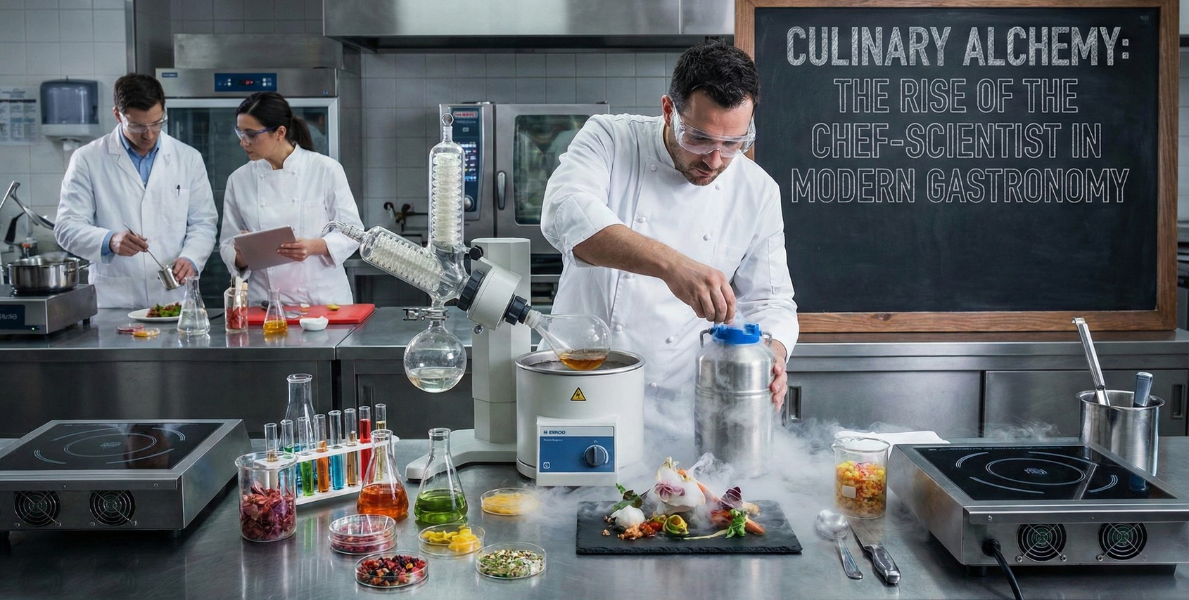
Culinary alchemy signifies the blending of scientific insights with traditional cooking methods, birthing the chef-scientist in modern gastronomy. Techniques such as molecular gastronomy and sous-vide redefine flavor profiles and textures. Chefs utilize advanced tools to push culinary boundaries, enticing diners with innovative dishes. The restaurant experience is evolving, focusing on multisensory engagement and storytelling. This transformative approach is just the beginning, offering a glimpse into the future of immersive dining experiences. Many aspiring chefs begin their journey by building strong fundamentals, often through a well‑structured culinary arts course that nurtures both creativity and technical confidence as they grow into more experimental culinary roles.
The Intersection of Science and Culinary Arts
While culinary traditions have evolved over centuries, the integration of scientific principles into gastronomy has transformed the way chefs approach their craft. This intersection of science and culinary arts has given rise to new methodologies, such as molecular gastronomy, which harnesses chemical reactions to create unexpected textures and flavors. Chefs now experiment with various techniques, including spherification and emulsification, allowing them to reimagine classic dishes. Additionally, understanding the science of ingredients empowers chefs to enhance nutritional profiles without sacrificing taste. As technology advances, tools like sous-vide and precision cooking further enable culinary innovation, encouraging chefs to push boundaries. Aspiring professionals who wish to deepen their understanding of these scientific techniques often look toward institutions such as the best culinary arts colleges in guwahati, where modern methods are taught in an applied, hands‑on environment.
Innovative Techniques and Their Impact on Flavor
Innovative techniques in modern gastronomy have reshaped the landscape of flavor development, allowing chefs to create unique culinary experiences. Methods such as sous-vide cooking, molecular gastronomy, and fermentation have revealed new dimensions of taste, texture, and presentation. Sous-vide, for instance, enables precise temperature control, enhancing the natural flavors of ingredients while preserving their moisture. Molecular gastronomy introduces scientific principles to alter textures and flavors, transforming traditional dishes into avant-garde creations. Additionally, fermentation not only deepens flavor complexity but also promotes health benefits. These techniques empower chef-scientists to push boundaries, fostering creativity and elevating dining to an art form. As chefs continue to experiment, the potential for innovative flavor combinations expands, enchanting the palates of adventurous diners worldwide.
The Future of Dining: Experiential and Interactive Cuisine
How will the dining experience evolve as technology and creativity converge? The future of dining promises a transformative journey, where experiential and interactive cuisine redefine traditional meals. Diners will engage with their food through augmented reality, allowing them to visualize ingredients and preparation methods. Chefs will adopt immersive storytelling techniques, creating multisensory experiences that stimulate taste, smell, and sight. Robotics and AI will personalize dishes based on individual preferences, enhancing the connection between the diner and the culinary craft. Collaborative dining environments will emerge, encouraging guests to participate in the cooking process, fostering creativity and community. As innovation reshapes gastronomy, the act of eating will transcend mere consumption, becoming an engaging and memorable experience that stimulates all senses. For those aiming to refine their craft and gain practical, technique-driven expertise, pursuing a diploma in culinary skills in kolkata can offer meaningful preparation for the future of experiential cuisine.
Frequently Asked Questions
What Qualifications Do Chef-Scientists Typically Have?
Chef-scientists typically possess a blend of culinary training and scientific education. Many hold degrees in culinary arts, while others may have formal qualifications in food science or chemistry. Experience in high-pressure kitchens complements their academic background, enabling them to experiment with flavors and techniques. Continuous professional development, including workshops and certifications, further enhances their skills. This unique combination fosters a deeper understanding of ingredients and processes, driving innovation in modern gastronomy.
How Can Home Cooks Apply Scientific Principles in Their Cooking?
Home cooks can enhance their culinary skills by applying scientific principles to their cooking. By understanding concepts such as temperature control, ingredient interactions, and chemical reactions, they can experiment with textures and flavors. Techniques like sous-vide cooking help achieve precise temperature management, while utilizing emulsification can create stable sauces. Additionally, learning about fermentation can introduce new flavors. Embracing these scientific methods fosters creativity and innovation, transforming the home cooking experience into an exploratory adventure.
What Role Does Molecular Gastronomy Play in Modern Cuisine?
Molecular gastronomy plays a transformative role in modern cuisine by merging culinary art with scientific principles. This innovative approach allows chefs to deconstruct traditional dishes and reimagine flavors, textures, and presentations. Techniques such as spherification, foaming, and gelification enable the creation of unexpected sensory experiences, enchanting diners. By embracing these methods, chefs push the boundaries of gastronomy, fostering creativity and encouraging a deeper appreciation for the science behind culinary techniques.
Are Chef-Scientists Involved in Food Sustainability Efforts?
Chef-scientists are increasingly engaged in food sustainability efforts, leveraging their knowledge of science to address pressing environmental issues. By experimenting with innovative techniques and sustainable ingredients, they aim to reduce waste, enhance nutritional profiles, and promote ethical sourcing. Their interdisciplinary approach fosters collaboration with farmers and environmentalists, resulting in creative solutions that align culinary arts with ecological responsibility. This fusion of gastronomy and sustainability reflects a growing commitment to a more sustainable food system.
How Do Chef-Scientists Collaborate With Food Scientists and Researchers?
Chef-scientists often collaborate with food scientists and researchers to innovate and enhance culinary practices. This partnership enables the exchange of knowledge regarding food chemistry, nutrition, and sustainable practices. They work together on projects that explore flavor enhancement, ingredient functionality, and preservation techniques. By combining culinary artistry with scientific rigor, they develop new methods and products that not only elevate dining experiences but also address pressing issues such as food waste and sustainability.