
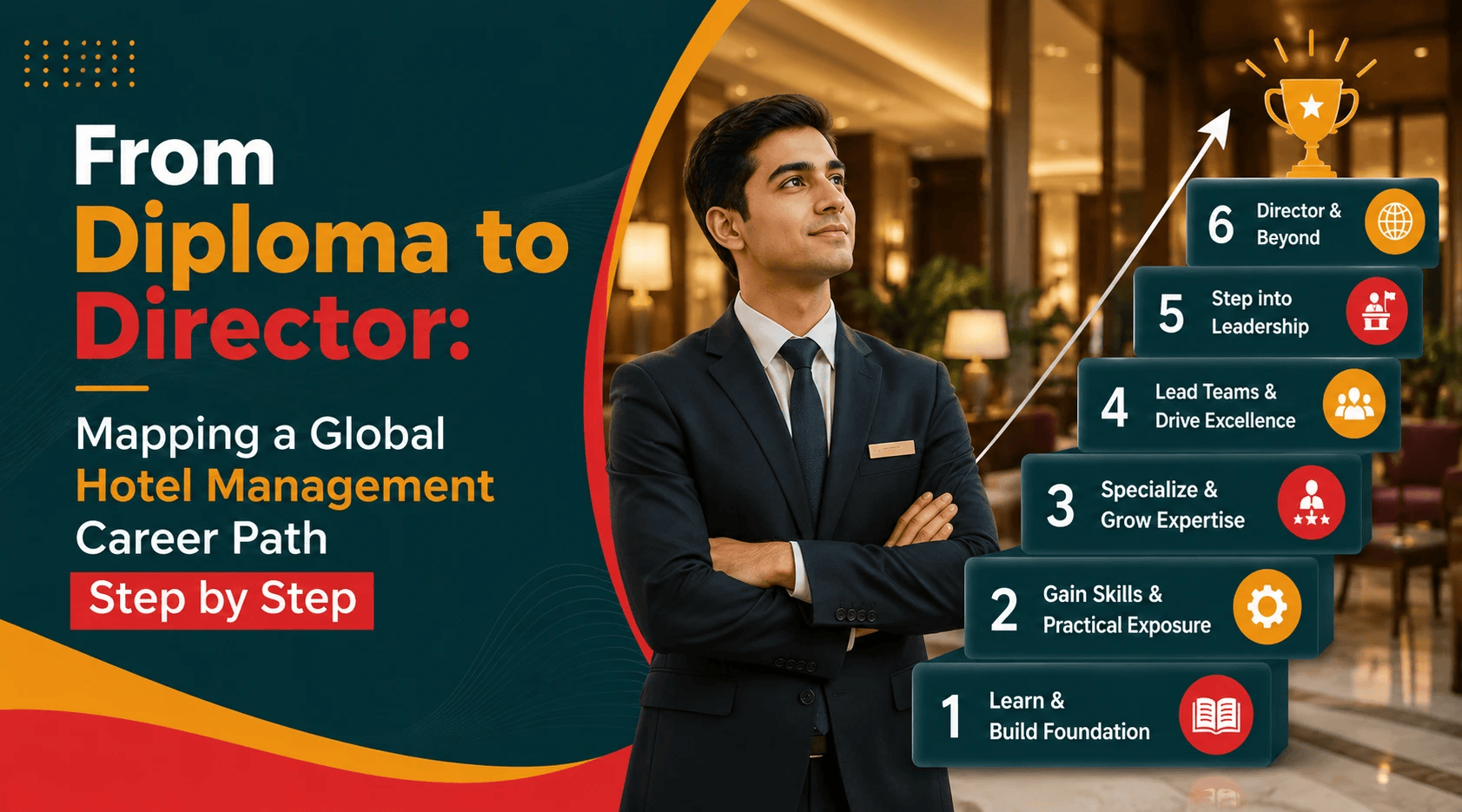
A career in hospitality rarely follows a single straight line. Someone may begin with a diploma, gain experience in a hotel department, move into supervision, and eventually take responsibility for an entire property. With the right combination of education, practical exposure, and professional development, hospitality can become a genuinely global career. For students exploring hotel management courses in Kolkata, understanding how this progression works can make the profession feel much more achievable.
Step 1: Start With the Right Qualification
The first stage is choosing an academic program that matches your career goals.
A diploma in hotel management in Kolkata can provide a foundation in essential hotel operations, while degree-level programs can offer broader academic preparation.
Students can study areas such as front office operations, housekeeping, food production, food and beverage service, and hospitality management.
Those interested in beginning their journey can explore IAM's hotel management course options to understand available programs.
The goal at this stage is not to become a manager immediately. It is to build the operational knowledge that future responsibilities will depend on.
Step 2: Gain Real Industry Exposure
Hospitality is highly practical. Communication, guest handling, teamwork, and professional discipline develop significantly through workplace experience.
Industry training allows students to observe how different departments function and how professionals respond to real guest requirements.
IAM providesindustry training and internships to help learners connect classroom concepts with professional hospitality environments.
This exposure can also help students discover which department suits their interests.
Step 3: Begin Your Professional Career
After completing a relevant qualification, graduates can enter the industry through entry-level roles.
Possible starting areas include:
- Front office
- Food and beverage service
- Housekeeping
- Food production
- Guest relations
- Events
- Resort operations
The first job is an opportunity to understand hotel operations from the ground up. Professionals who perform consistently can gradually take on additional responsibilities.
This stage is particularly important because strong managers usually understand the practical realities faced by frontline teams.
Step 4: Move Into Supervisory Roles
After gaining experience, professionals may progress into positions such as team leader, supervisor, or department coordinator.
At this stage, technical ability alone is not enough.
Employees begin managing schedules, supporting colleagues, handling guest concerns, and maintaining service standards. Communication and decision-making become increasingly important.
Step 5: Develop Management Skills
The transition from supervisor to manager requires a broader understanding of the business.
Managers may become responsible for budgets, staff performance, operational targets, guest satisfaction, and departmental results.
They need to understand how individual departments connect to the hotel's overall performance.
Continuous professional development can therefore make a significant difference. Hospitality professionals should keep learning about customer behavior, technology, sustainability, and emerging service models.
IAM also provides industry support for hospitality students as part of its career-oriented approach.
Step 6: Build an International Career
One of the most attractive aspects of hospitality is its global nature.
Hotels, resorts, cruise companies, and international hospitality groups operate across multiple countries. Skills developed in one market can potentially be transferred to another, although professionals may need to understand local regulations, cultures, and workplace expectations.
Strong English communication, cultural awareness, adaptability, and professional confidence can be valuable for anyone hoping to work internationally.
This is why choosing an institution with industry exposure can be useful from the beginning.
Students interested in studying in Kolkata can explore the IAM Kolkata campus, while those considering Assam can explore the IAM Guwahati campus.
Step 7: Work Towards Senior Leadership
The path towards hotel director or general manager is built over years of experience.
Senior leaders oversee multiple departments and are responsible for the property's overall performance. Their work can involve financial planning, recruitment, guest satisfaction, business development, and strategic decision-making.
Reaching this level requires more than qualifications. Leadership ability, commercial understanding, resilience, and experience all matter.
Students researching the best hotel management institute in Kolkata should therefore consider whether their chosen institution provides a strong combination of academic learning and practical exposure.
IAM's hospitality management education approach gives students a foundation from which they can begin developing the skills needed for a professional career.