
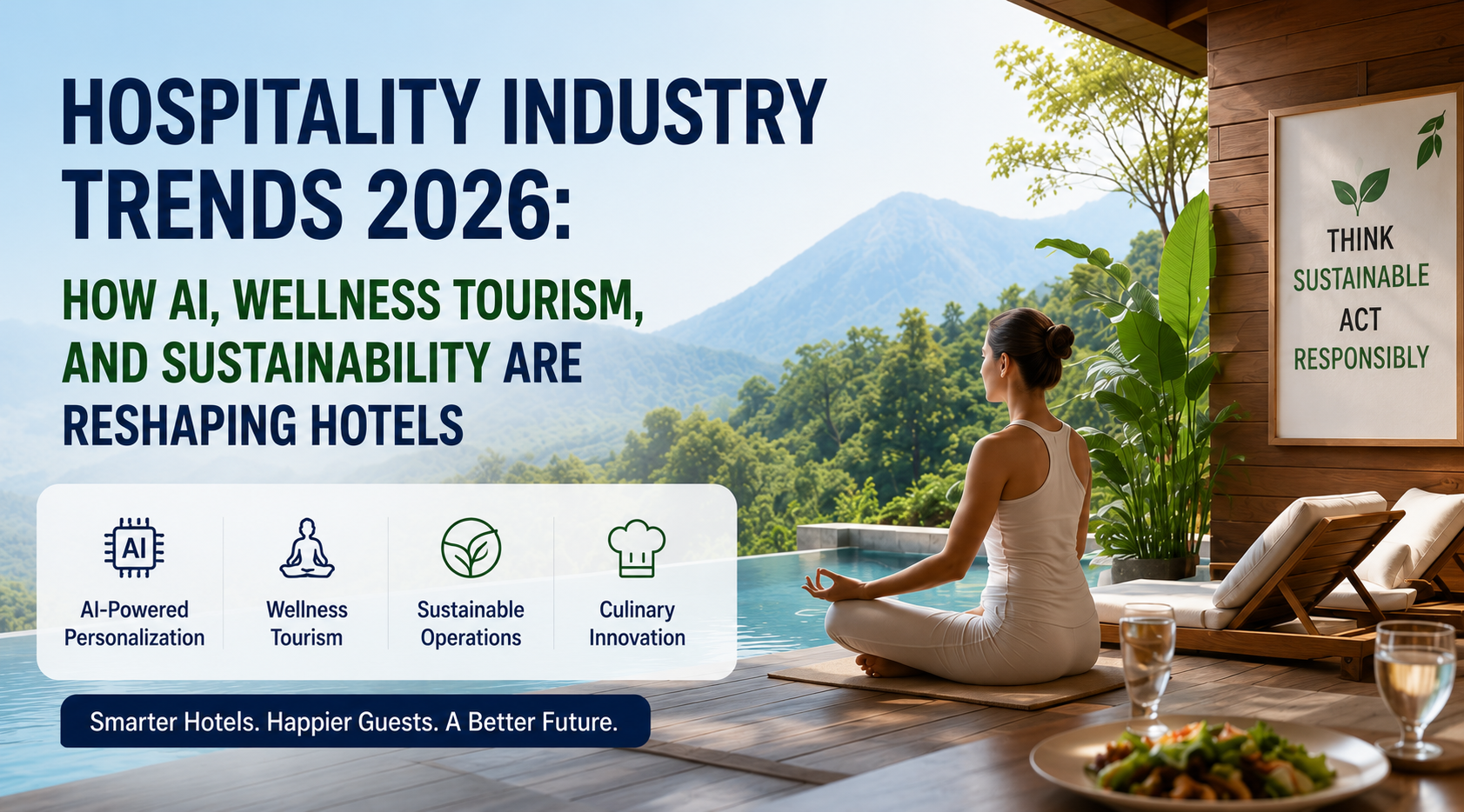
Hospitality is an industry where exceptional service and genuine guest care define success. Comfortable rooms, memorable dining, warm greetings, and thoughtful service have long defined a wonderful hotel experience. Yet in 2026, guest expectations extend far beyond these fundamentals. Travelers now seek personalized experiences, environmentally responsible accommodations, and stays that support their physical and mental well-being. At the same time, hotels are embracing advanced technology to improve efficiency without losing the human touch.
For students dreaming of a career in hospitality, this transformation presents exciting opportunities. Today's professionals need more than operational knowledge; they must understand technology, sustainability, guest psychology, and global travel trends. This is why modern hotel management courses are evolving to prepare graduates for an industry that looks very different from what it did even five years ago.
Technology Is Enhancing Hospitality, Not Replacing It
AI is a hot topic in hospitality, but it won't replace hotel staff. Instead, it allows them to focus on what matters most, creating memorable guest experiences.
Behind the scenes, technology also helps hotel teams forecast occupancy, manage room inventory, reduce operational expenses, and respond more quickly to guest requests. While software handles repetitive tasks, hospitality professionals dedicate more attention to personalized service, which remains the heart of the industry.
Students pursuing a bachelor's degree in hotel management or a BSc in hotel management are now introduced to digital hospitality tools alongside traditional hotel operations, preparing them for workplaces where technology and customer service work together.
Wellness Tourism Has Become a Lifestyle Choice
Travel today is about more than visiting new destinations. Many travelers now choose hotels that help them relax, recharge, and improve their overall well-being.
This growing interest has transformed wellness tourism into one of the fastest-growing segments within the hospitality sector. Hotels are investing in wellness-focused amenities such as yoga sessions, meditation spaces, healthy dining concepts, fitness centers, spa therapies, and nature-inspired experiences that encourage guests to disconnect from daily stress.
Professionals working in hospitality and tourism management are expected to understand these changing guest preferences and design experiences that combine comfort with wellness. As a result, many travel and tourism courses now include modules that explore emerging travel behaviors, destination management, and customer experience planning.
Sustainability Is Becoming a Competitive Advantage
Environmental responsibility is no longer simply a marketing message. Travelers increasingly support hotels that demonstrate genuine commitment to sustainable practices.
Across the hospitality sector, businesses are reducing plastic consumption, improving waste management, conserving water, sourcing ingredients locally, and investing in energy-efficient technologies. Many hotels are redesigning their operations to minimize environmental impact while maintaining exceptional guest comfort.
Guests notice these efforts. They appreciate refillable amenities instead of single-use plastics, locally sourced menus, eco-friendly housekeeping practices, and buildings designed with sustainable materials.
Future hospitality professionals must understand that sustainability is not separate from business success; it strengthens brand reputation, improves operational efficiency, and builds lasting guest trust.
Students studying at the best hotel management institute in India are increasingly exposed to sustainable hospitality practices that prepare them to manage environmentally responsible operations throughout their careers.
Culinary Experiences Continue to Shape Guest Memories
Ask travelers what they remember most about a hotel stay, and many will mention the food.
This shift has increased demand for skilled culinary professionals who combine creativity with technical expertise.
Students enrolling in a culinary arts course develop practical skills in food production, kitchen management, nutrition, presentation, and international cuisine, preparing them for careers that extend far beyond traditional hotel kitchens.
Hospitality Careers Are Expanding Beyond Hotels
One of the biggest misconceptions about hospitality education is that it only leads to hotel jobs. In reality, hospitality graduates now work across a wide range of industries where customer experience plays a central role.
Graduates with qualifications such as a bachelor's in hotel management gain versatile skills, including communication, leadership, operations management, customer service, and problem-solving. These abilities remain valuable regardless of the industry they choose.
Practical Learning Is More Valuable Than Ever
Hospitality cannot be mastered through classroom theory alone. Confidence develops through practical exposure, real-world training, and industry interaction.
Many students therefore prioritize choosing a hotel management institute with placement, knowing that structured industry exposure significantly improves career readiness and employment opportunities.
The Hospitality Professional of Tomorrow
As hotels continue to evolve, employers are searching for professionals who possess a balance of technical knowledge and human skills.
Communication, emotional intelligence, adaptability, leadership, cultural awareness, and creative thinking are becoming just as important as operational expertise. Technology may streamline processes, but genuine hospitality will always depend on people who understand how to make guests feel welcomed and valued.
This is why the best hotel management courses in India increasingly combine academics with personality development, digital skills, international hospitality standards, and practical training.