
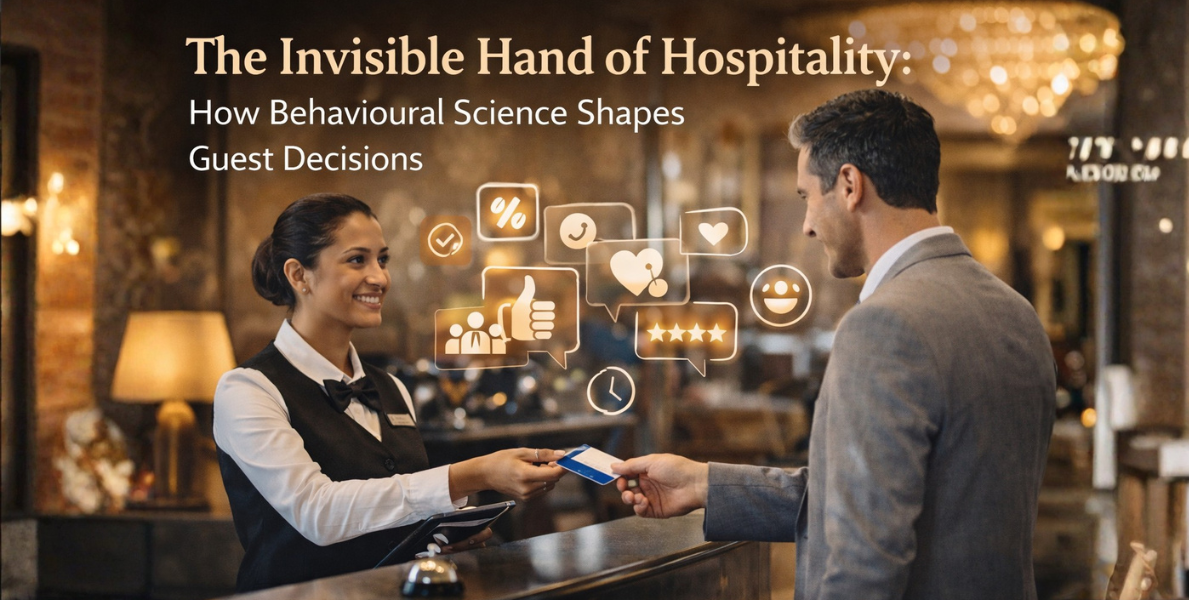
Behavioural science plays an essential role in shaping guest decisions within the hospitality industry. Factors such as social proof, emotional triggers, and cognitive biases influence preferences and choices, often without guests being consciously aware of them. These principles are increasingly explored in professional education pathways such as an international hospitality management course, where understanding human behaviour is central to delivering meaningful guest experiences. Environmental cues in hotel design enhance guest moods and interactions, while effective marketing strategies tap into emotional connections. Additionally, managing decision fatigue simplifies choices, promoting satisfaction. By understanding these dynamics, hoteliers can foster loyalty and improve guest experiences.
The Psychology of Choice: Understanding Guest Preferences
When guests enter a hospitality venue, their choices are influenced by a complex interplay of psychological factors. Individual preferences are shaped by elements such as social proof, cognitive biases, and emotional triggers. For instance, the presence of positive reviews may create a perception of quality, steering guests towards particular options. Framing effects also influence how choices are presented, altering decisions based on context rather than substance.
The desire for uniqueness can further shape preferences, leading guests to seek experiences aligned with their self-identity. Hospitality professionals who understand these psychological drivers are better equipped to design services and communications that resonate with guest expectations. This understanding allows organisations to innovate thoughtfully, enhancing satisfaction and long-term loyalty.
Environmental Cues: How Hotel Design Influences Behaviour
Guest behaviour within hospitality environments is strongly shaped by physical and sensory cues, particularly design elements. Architectural features such as open spaces and access to natural light foster comfort and relaxation, encouraging guests to engage more fully with their surroundings. Colour schemes, textures, and artwork influence mood and perception, subtly guiding emotional responses.
Strategic placement of amenities such as lounges or service counters can encourage social interaction, while sensory elements like scent and sound create lasting impressions. Professionals trained through practical programmes such as a front office management course in Kolkata often gain firsthand exposure to how these cues affect guest behaviour. By applying these insights, hoteliers can create environments that positively influence decision-making and satisfaction.
The Power of Perception: Marketing Strategies That Win Over Guests
Marketing strategies in hospitality rely heavily on perception, shaping how potential guests view a property before arrival. Storytelling plays a vital role, transforming functional offerings into emotionally engaging experiences. Visual branding and consistent messaging help create familiarity and trust, while guest testimonials and reviews reinforce credibility.
Personalised communication further strengthens this perception by making guests feel recognised and valued. When marketing aligns with behavioural insights, it becomes more than promotion; it becomes a bridge between expectation and experience. Hotels that understand this dynamic are better positioned to attract and retain discerning guests in a competitive market.
Decision Fatigue: Simplifying Choices for Enhanced Satisfaction
An excess of choice can overwhelm guests, leading to decision fatigue and reduced satisfaction. When faced with too many options, guests may feel uncertain or disengaged. Hospitality organisations that recognise this challenge actively simplify decision-making through curated offerings and guided recommendations.
For example, limited menu selections or personalised service suggestions reduce cognitive load and improve the overall experience. This approach reflects a deeper understanding of human behaviour, where simplicity enhances confidence and enjoyment. By reducing friction in the decision process, hotels create a more relaxed and satisfying environment for their guests.
Building Loyalty: The Role of Emotional Connections in Hospitality
Emotional connections play a decisive role in transforming first-time guests into loyal patrons. Beyond efficient service, guests value experiences that feel personal and meaningful. By applying behavioural science, hospitality professionals can identify opportunities to build emotional resonance through thoughtful interactions and customised services.
Educational exposure, such as that offered by the best colleges for hospitality management in Guwahati, often emphasises this balance between operational skill and emotional intelligence. When guests feel understood and appreciated, loyalty develops naturally. Over time, these emotional bonds become a powerful driver of repeat visits and positive word-of-mouth.
Frequently Asked Questions
How Does Social Media Impact Guest Decision-Making in Hospitality?
Social media shapes guest perceptions through shared experiences, reviews, and visual content. User-generated content builds trust, while targeted campaigns influence preferences and booking decisions.
What Role Does Online Review Sentiment Play in Guest Choices?
Online review sentiment strongly affects guest confidence. Positive feedback enhances credibility, while negative reviews can deter bookings, highlighting the importance of reputation management.
How Can Hotels Effectively Utilise Loyalty Programmes?
Hotels can strengthen loyalty programmes by personalising rewards, offering tiered benefits, and aligning incentives with guest preferences. Data-driven insights help ensure relevance and engagement.
What Demographic Factors Influence Guest Behaviour in Hospitality?
Age, income, cultural background, and travel purpose all influence guest expectations and behaviour. Understanding these differences enables more tailored and effective service delivery.
How Do Cultural Differences Affect Hospitality Expectations and Experiences?
Cultural norms shape perceptions of service quality, communication, and hospitality standards. Awareness of these differences allows providers to deliver more inclusive and satisfying experiences.