
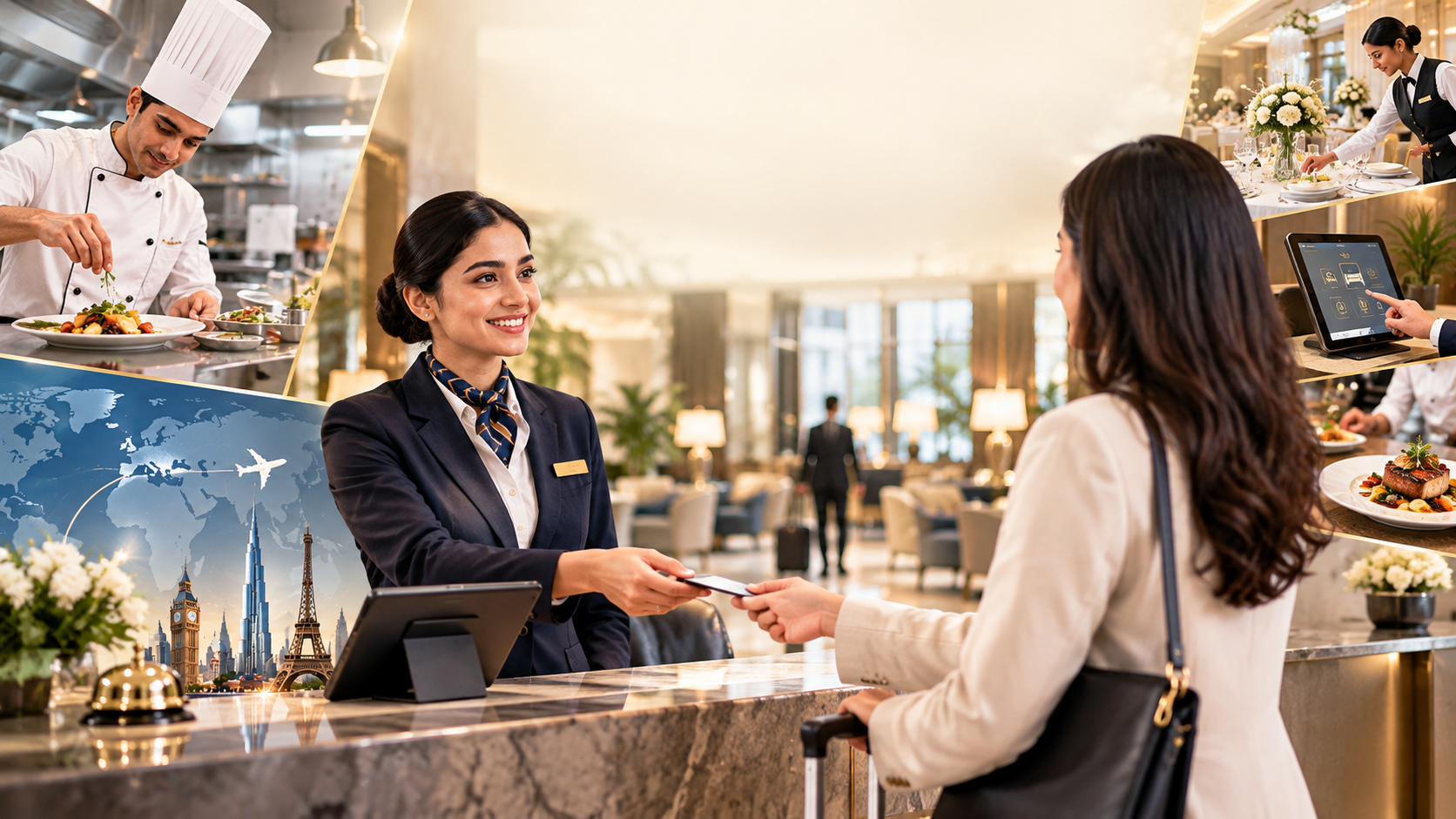
The hospitality education continues to focus on practical learning and international exposure; aspiring professionals need to develop skills that prepare them for changing workplace expectations. Understanding the latest hospitality industry trends in 2026 can help students make informed career choices and identify areas for professional development.
1. Practical Learning Is Becoming Essential
Classroom knowledge provides a foundation, but hospitality professionals also need experience handling real responsibilities. Training in food production, front office operations, housekeeping, and guest services helps students understand how different departments function together. IAM Hotel School emphasizes practical learning through hospitality events, food festivals, and hands-on activities. These experiences allow learners to apply their knowledge while developing communication, teamwork, organization, and management abilities. For students considering an international hotel management course, practical exposure is an important factor to examine when choosing an educational program.
2. International Exposure Creates Wider Learning Opportunities
Hospitality offers opportunities to work in different locations, interact with diverse guests, and understand varied service expectations. International internships, professional training, and exposure to global hospitality practices can help students develop a broader understanding of the industry. An international hospitality management program can introduce learners to management principles relevant to hotels and related service businesses. IAM highlights international internships, placement opportunities, and globally oriented education as features of its learning experience.
3. Technology Is Becoming Part of Hospitality Education
Digital systems play an important role in modern workplaces, making technological awareness valuable for aspiring hotel professionals. Understanding computerized working environments, administrative processes, and operational systems can help learners prepare for professional responsibilities. IAM identifies computerized working environments and changing information technology requirements among the educational aims of its hospitality programs. Students should therefore develop both operational knowledge and the ability to adapt to workplace systems. When evaluating an international hospitality management course, applicants can review how the curriculum addresses management skills, administrative responsibilities, and technology-related learning.
4. Specialized Career Paths Are Still Available with Culinary Skills
Food preparation, bakery operations, pastry production, and beverage services represent important areas within hospitality education. Students who enjoy cooking or working with food can explore specialized training alongside broader hotel management studies. IAM offers programs in culinary skills, bakery and patisserie, and bartending and mixology. Its student-focused culinary activities also provide opportunities to practice food preparation and participate in organized food preparation and participate in organized events. Those interested in international hospitality can consider whether a general management qualification or a specialized culinary program better matches their interests and long-term career plans.
5. Events and Guest Experiences Require Strong Management Skills
Hospitality extends beyond accommodation and food service. Organizing events requires planning, coordination, communication, resource management, and attention to guest requirements. Food festivals and other campus activities at IAM provide students opportunities to participate in event organization, promotion, staffing, and culinary presentation. Such experiences help learners understand the responsibilities involved in delivering organized hospitality experiences. Students interested in event-related roles can benefit from developing interpersonal abilities alongside their technical knowledge.
6. Industry Exposure Helps Students Understand Workplace Expectations
Interaction with experienced professionals can give valuable insight into operational standards, recruitment expectations, and career development. Industry exposure also helps students understand how classroom concepts connect with professional responsibilities. IAM highlights experienced faculty, industry experts, practical training, and placement-related opportunities within its educational approach. Prospective applicants should review the available programs and training arrangements to understand how these elements fit their career objectives. An international hotel management institute that combines academic instruction with practical learning can offer a useful foundation for students entering this field. Top Hospitality Industry Trends 2026: What Every Hotel Professional Should Know The hospitality education continues to focus on practical learning and international exposure; aspiring professionals need to develop skills that prepare them for changing workplace expectations. Understanding the latest hospitality industry trends in 2026 can help students make informed career choices and identify areas for professional development.