
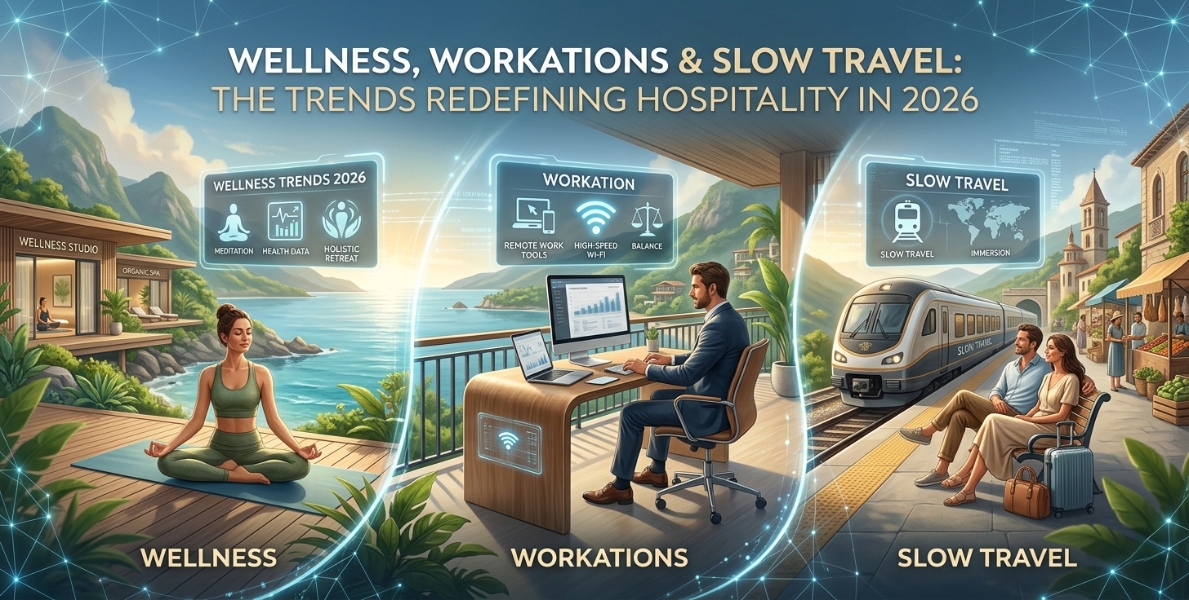
In 2026, the hospitality industry is witnessing significant changes driven by three main trends: wellness-focused accommodations, the workation phenomenon, and a growing preference for slow travel experiences. For those looking to build a career in this shifting landscape, pursuing a degree in hospitality and tourism management offers the necessary expertise to manage these complex guest needs.
Hotels are enhancing guest well-being with yoga studios and organic dining while adapting to remote work needs with designated spaces. Travelers now favor meaningful connections and sustainability, reflecting a shift towards a more conscious travel approach that prioritizes overall health and community engagement.
The Rise of Wellness-Focused Accommodations
How are wellness-focused accommodations transforming the hospitality landscape? These establishments are prioritizing the mental and physical well-being of their guests, leading to a significant shift in the industry. From yoga studios and meditation spaces to organic dining options and nature immersion experiences, wellness hotels are catering to a growing demand for holistic health.
Guests are increasingly seeking environments that promote relaxation, mindfulness, and rejuvenation, reshaping traditional hospitality norms. This trend also encourages hotels to invest in sustainable practices, enhancing their appeal to environmentally conscious travelers. As wellness becomes a central theme, accommodations are evolving into sanctuaries that support a healthier lifestyle.
Embracing the Workation Trend
What happens when the boundaries between work and leisure blur? The workation trend emerges, offering professionals the chance to blend productivity with relaxation. This approach allows individuals to work remotely from inspiring locations while maintaining their responsibilities.
Students enrolled in a diploma in tourism management in Kolkata study how to create such environments for digital nomads. Hotels and resorts are adapting by providing designated workspaces, high-speed internet, and wellness amenities.
This shift prioritizes flexibility, enabling employees to recharge while staying productive. As remote work grows, demand for workation-friendly accommodations continues to rise.
The Allure of Slow Travel Experiences
As travelers increasingly seek meaningful connections with their destinations, the allure of slow travel experiences has emerged as a compelling alternative to fast-paced tourism. This approach emphasizes immersion over speed, encouraging individuals to savor local cultures, traditions, and cuisines.
By spending more time in one place, travelers build deeper relationships with locals, fostering genuine interactions. Destinations focusing on sustainability and community engagement resonate strongly, offering activities such as artisanal workshops and nature walks.
The slower pace allows for reflection and rejuvenation, aligning with wellness trends and transforming travel into meaningful experiences.
Integrating Technology for Remote Work
The rise of slow travel aligns with the popularity of remote work, prompting the hospitality industry to adapt. Many accommodations now offer robust technology solutions, including high-speed internet, ergonomic workspaces, and office essentials.
Some of the best hospitality schools in Guwahati are integrating tech-driven service training into their curriculum. Additionally, virtual collaboration tools and wellness apps support productivity and well-being.
These innovations help professionals maintain efficiency while enjoying a flexible work environment.
Sustainability and Conscious Travel Choices
As travelers prioritize eco-friendly experiences, the hospitality industry is adopting sustainable practices. Hotels are reducing waste, using renewable energy, and sourcing local, organic food.
Many establishments pursue green certifications and promote responsible tourism. Guests increasingly prefer accommodations with water conservation and carbon offset programs.
This shift encourages innovation, allowing travelers to enjoy meaningful experiences while minimizing environmental impact.
Frequently Asked Questions
How Can I Find Affordable Wellness Accommodations?
Research wellness platforms, compare booking sites, subscribe to newsletters, and travel during off-peak seasons to find affordable options.
What Are the Best Destinations for Workations in 2026?
Popular destinations include Bali, Lisbon, Tbilisi, Medellín, Austin, and Barcelona due to their balance of work-friendly environments and cultural experiences.
Is Slow Travel Suitable for Families With Children?
Yes, slow travel can be suitable if balanced with engaging activities that keep children entertained while allowing cultural immersion.
How Do I Disconnect From Work During a Workation?
Set clear work boundaries, limit notifications, and prioritize leisure activities to maintain a healthy work-life balance.
What Certifications Should I Look for in Sustainable Accommodations?
Look for certifications such as LEED, Green Key, EarthCheck, and GSTC, which ensure adherence to environmental standards.